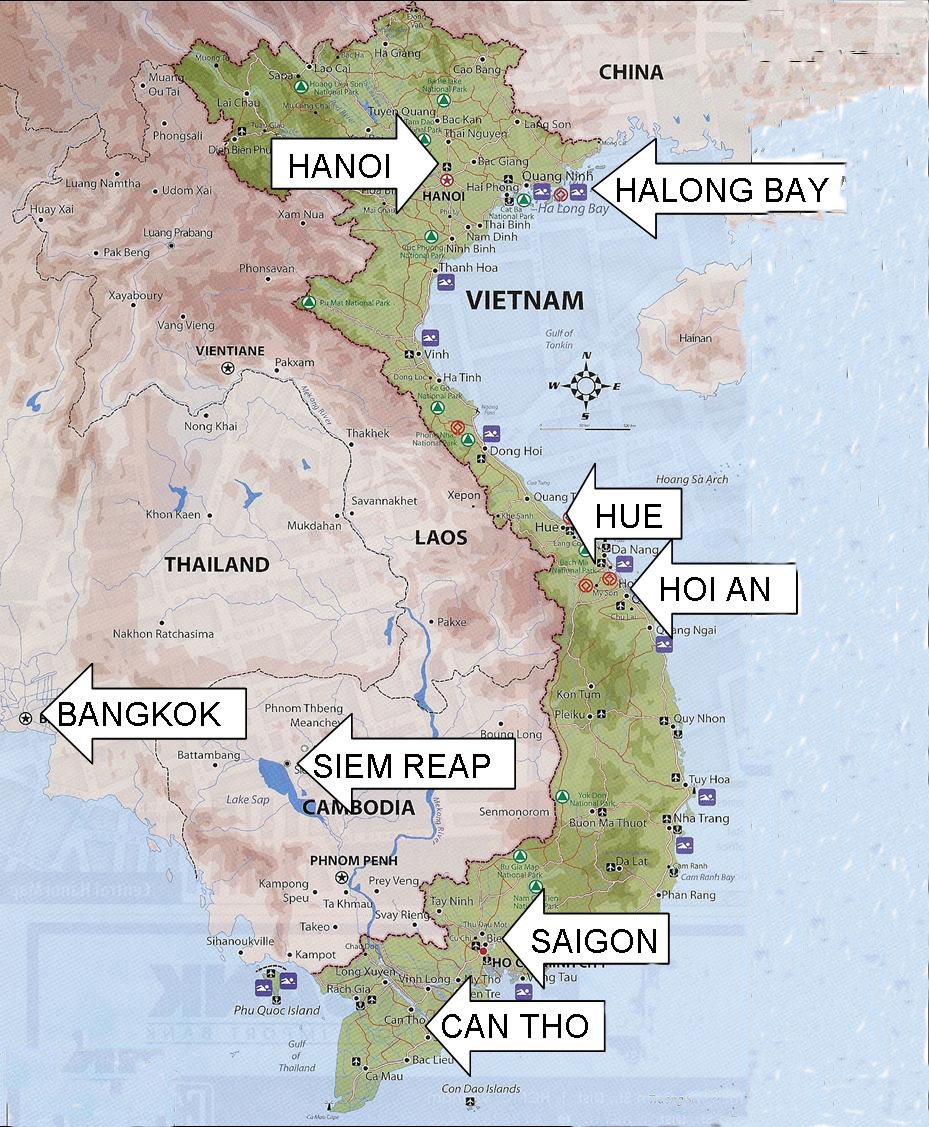
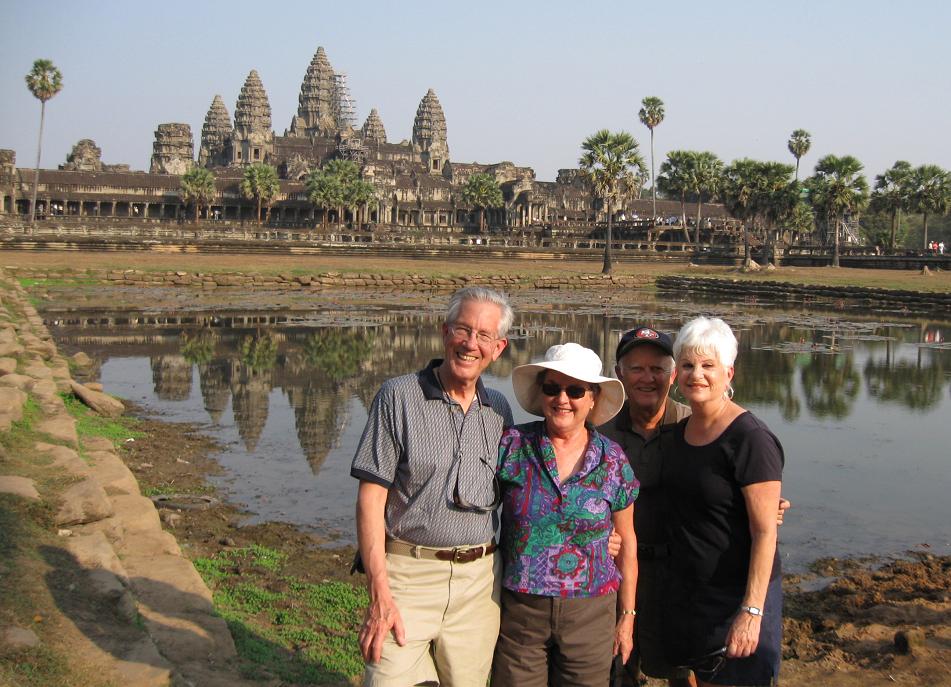
Mike and Sandy, along with Gary and Joan, friends from the old Walnut Creek neighborhood, spent 18 days
touring in Vietnam, Cambodia, and Thailand. (If you are familiar with the book "1000 Places To See
Before You Die," this trip took them to 8 of the 1000.) Their travels in Vietnam ranged from Hanoi
in the north, Halong Bay on the northern coast, down to Hue, Da Nang, and Hoi An, and then to the
South for Saigon and the Mekong Delta area. Cambodia was all about seeing Angkor Wat and the surrounding
area, and we briefly stopped in Bangkok to visit with a friend of Gary and Joans, and to refresh
before the long flight home.
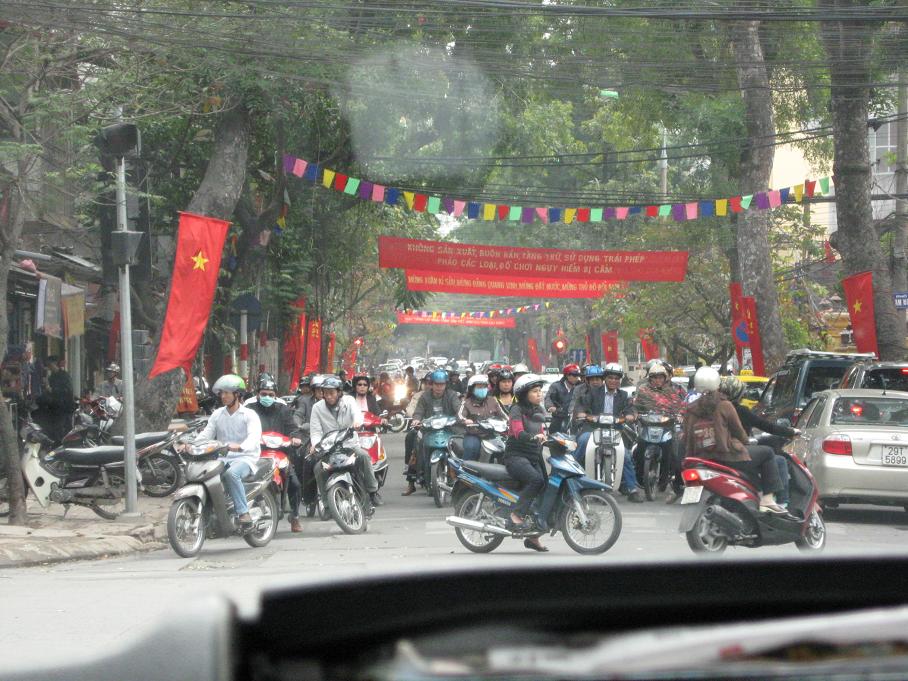
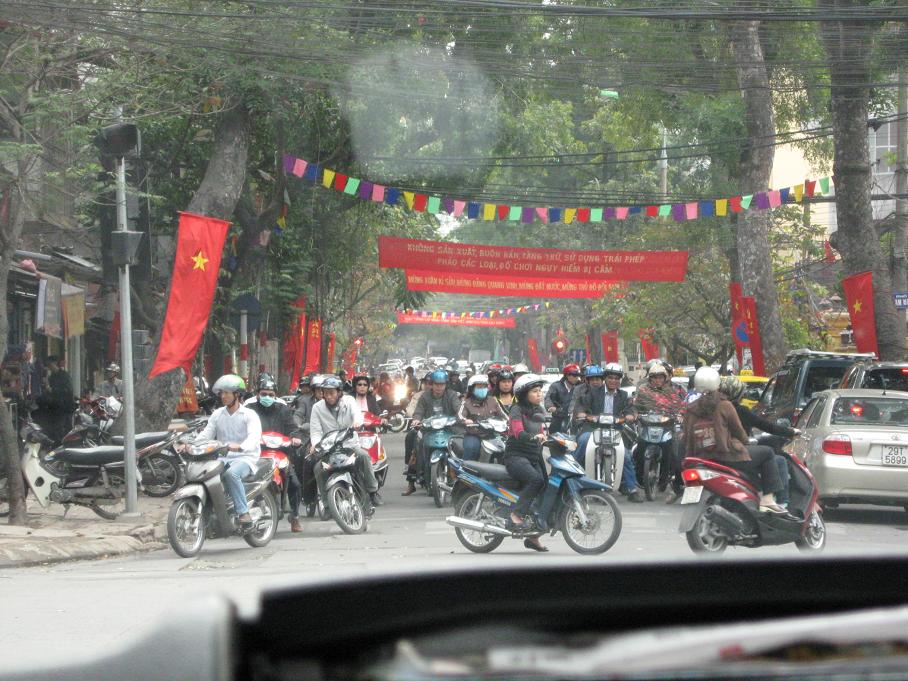
Vietnam seems like a miniature China of several years ago. Yes, the government is obviously communist, but
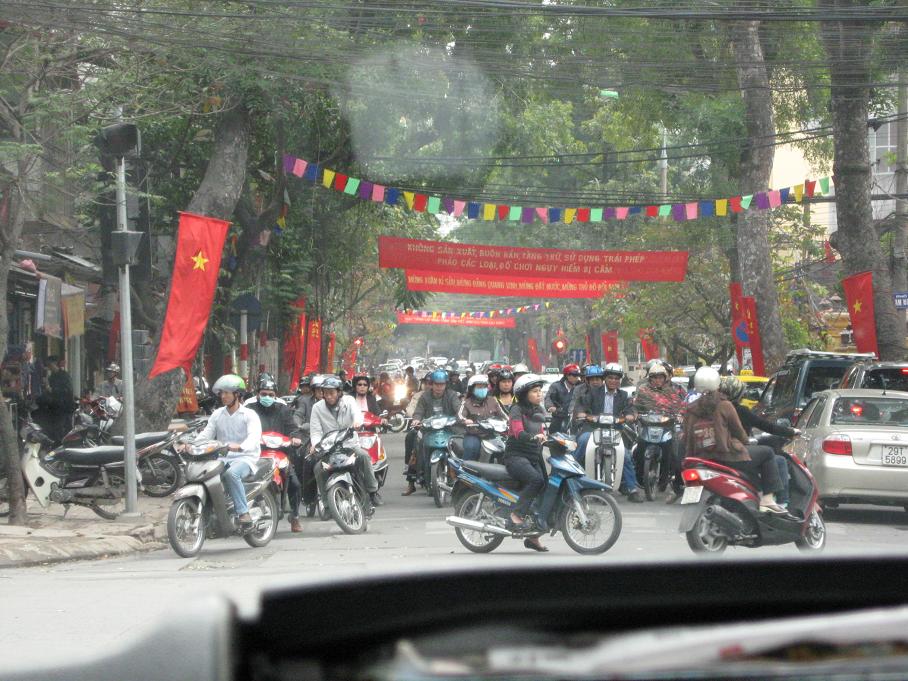
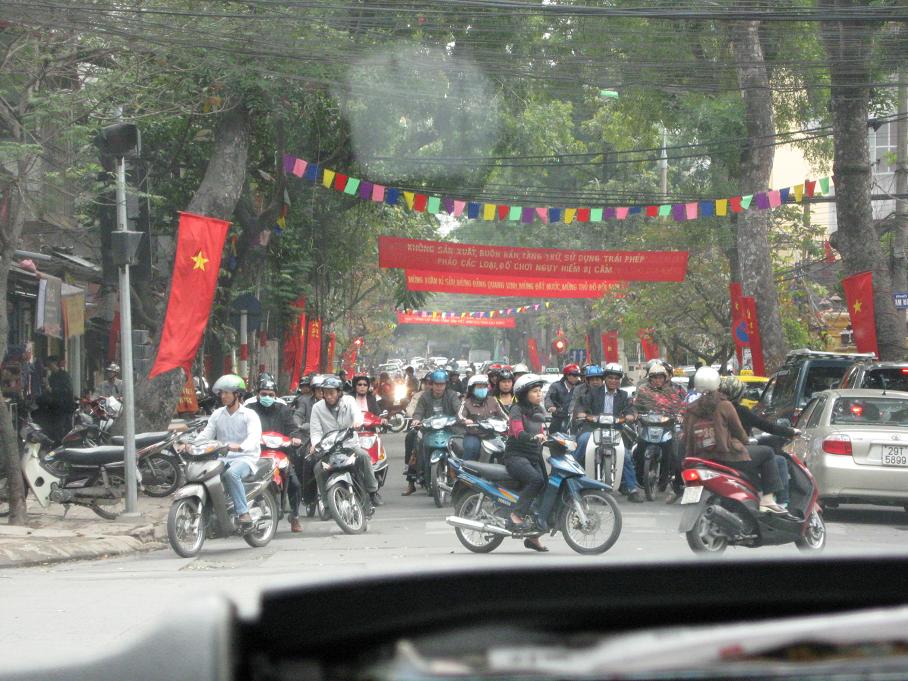
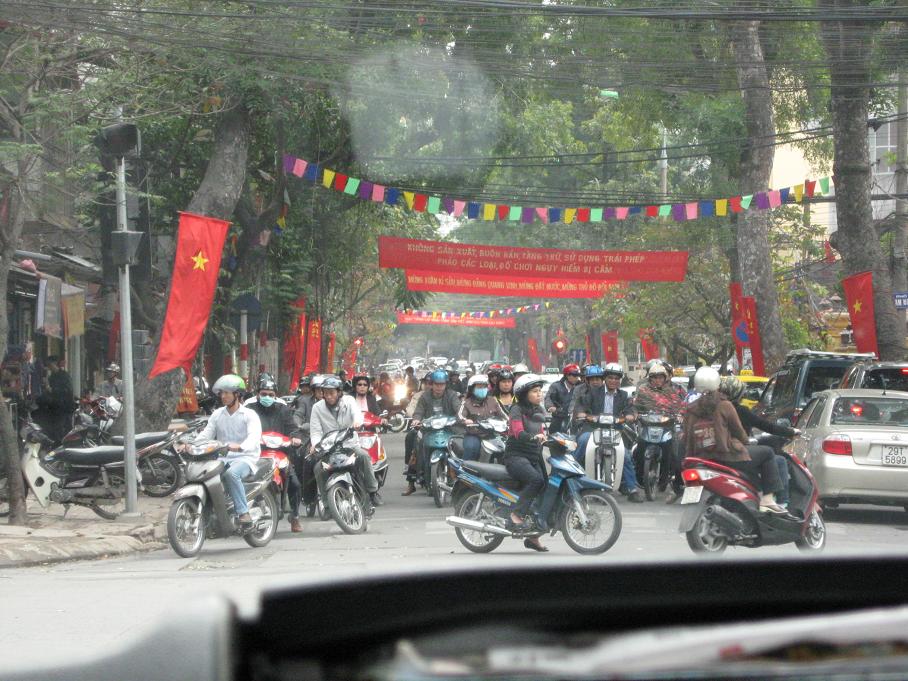
capitalism has taken off with a roar, and is racing full speed ahead. The mascot of Vietnam should be the
motor bike -- they are everywhere, having obviously replaced the lowly bicycle, and not only transport
people (of all ages), but act as miniature pickup trucks, as well.
Our hotel in Hanoi was the Metropole, now run by Sofitel -- an old French mansion built in 1901, and used for many
VIP functions over the years (our particular room was used as the Italian Embassy from 1975 to 1981. We of course
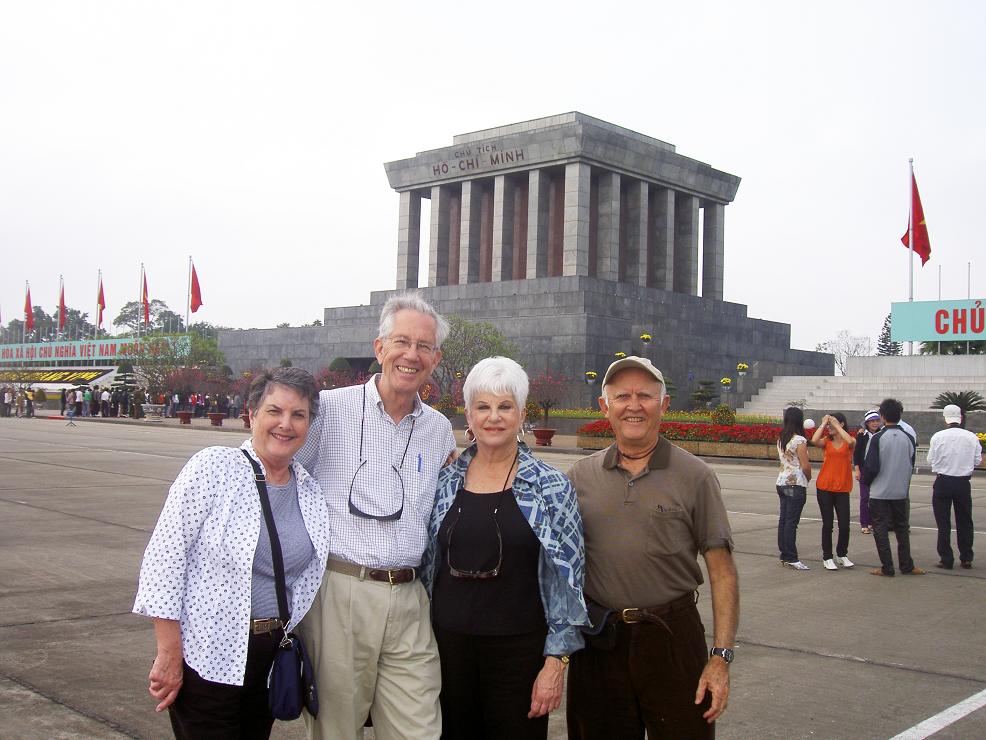
had to tour Ho Chi Minh's modest retirement home, and his mausoleum (with his actual embalmed body), and saw
the monument at the spot where John McCain's plane crashed. We weren't able to see the infamous "Hanoi Hilton" jail,
because (ironically) it has been torn down and replaced by this shopping center and office tower.
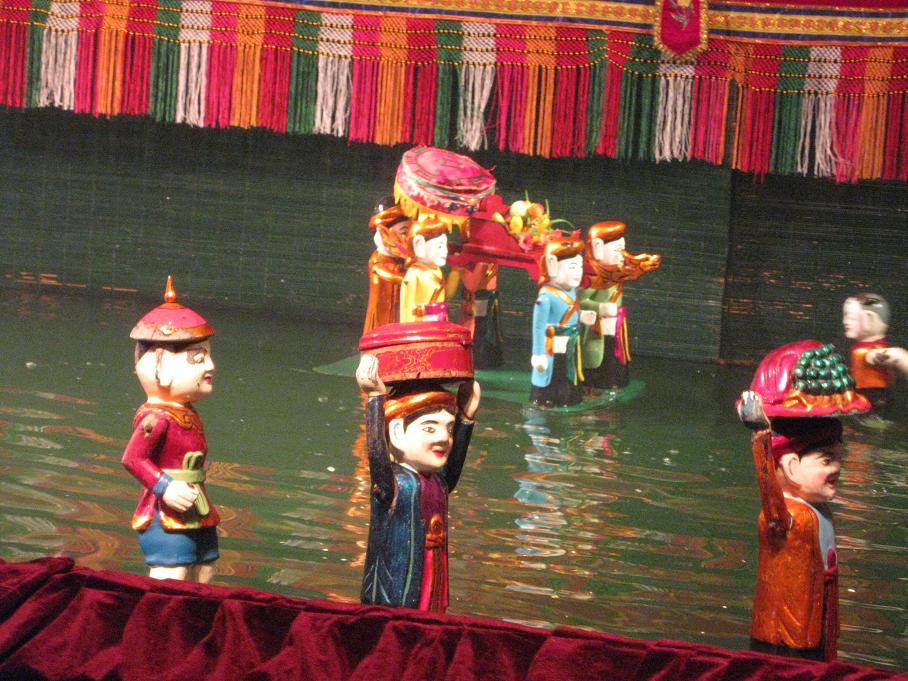
A variety of historic Vietnamese Buddhist (similar to the
Buddhism practised in China, but apparently not exactly the same) temples, and a fascinating water puppet
show were also on our formal program. We also learned we would really appreciate our guide (who was with
us during our entire time in Vietnam) -- a young bachelor who doesn't cook but loves to eat, and personally
knew every great restaurant in the whole country!
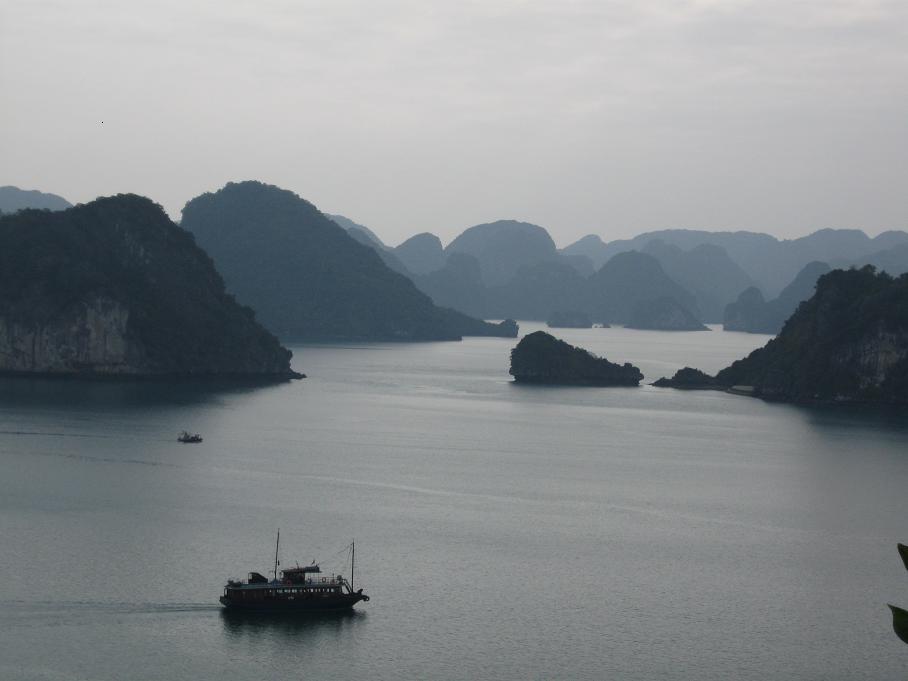
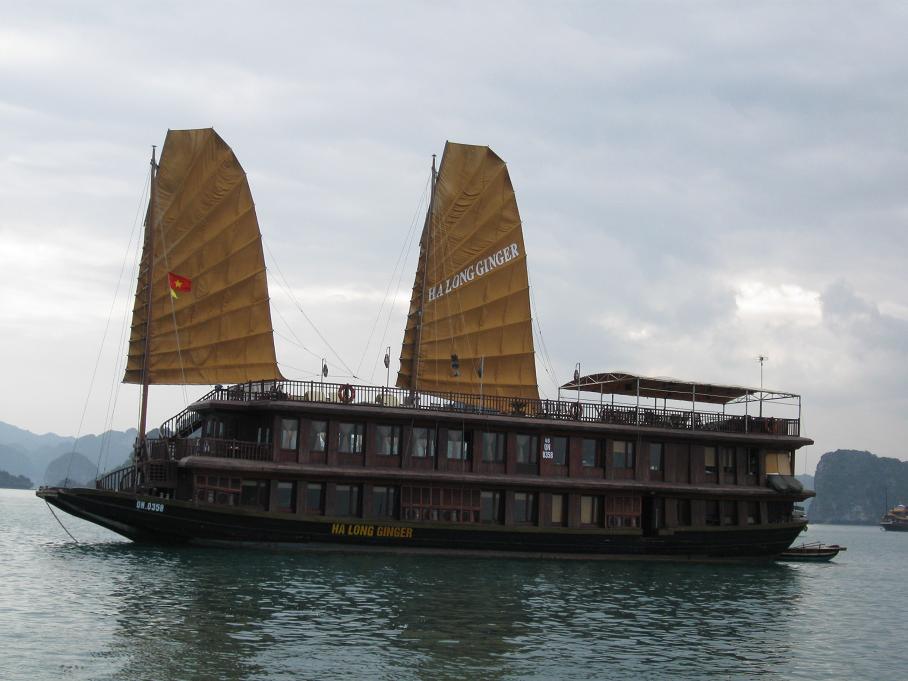
Halong Bay, a UNESCO World Heritage site, is a huge bay filled with thousands of limestone pinnacles,
most just picturesque, but some big enough to walk around on. We spent the night on an old junk (OK, it
really was a new touring boat built to look like it was an old junk), and I enjoyed some sightseeing
in some caves from kayak level. We visited a floating fishing village, and were in turn visited by the kids who have
learned to supplement the family's fishing income by selling trinkets and snacks to the visiting tourists.
Hue was the capital of Vietnam for hundreds of years before 1945, and consists of a huge walled city
modeled on the "Forbidden City" in Beijing, China. Some of it was destroyed during the several wars to
pass through the area in recent years, some parts are being restored, and some parts miraculously are
the originals built in the early 1800s. Our hotel in Hue, right on the banks of the Perfume River
opposite the Citadel, was one of the best of the trip -- La Residence, a botique hotel built in the
mansion of the French colonial governor of the area. (This is me overlooking the river from our room
balcony.) We noticed the local river police were taking advantage of some old US Navy boats left behind.
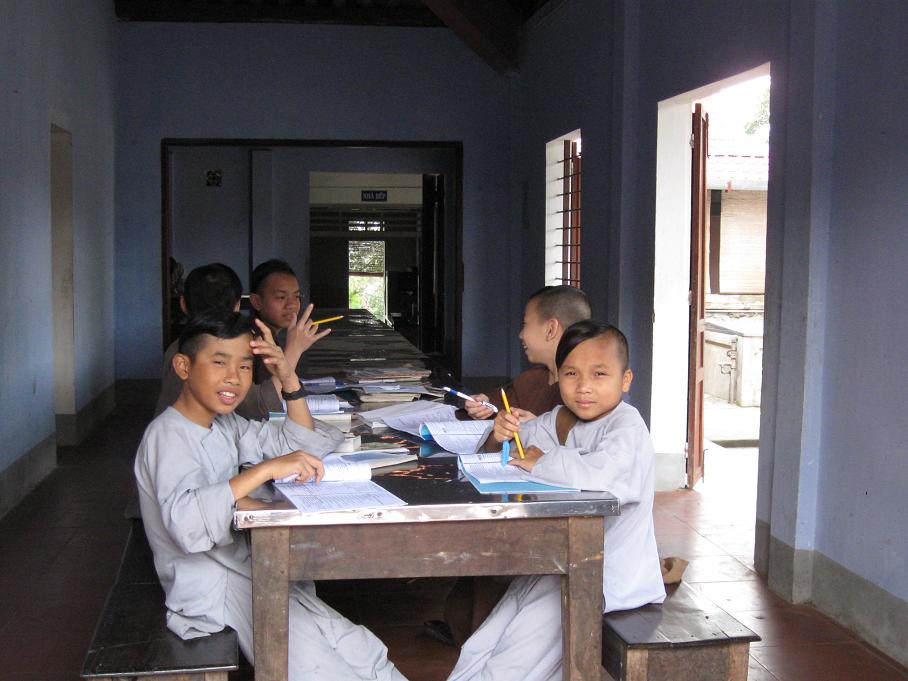
We also visited a nearby Buddhist moneastery, where we met some young boys studying to become monks.
On drive on to Hoi An took us over a beautiful mountain pass right along the coast line. (We think
they were trying to say the road was steep and bumpy!) Hoi An was a nice interlude to our touring,
being a small, pedestrian-friendly old trading port filled with neat shops, art galleries, etc.
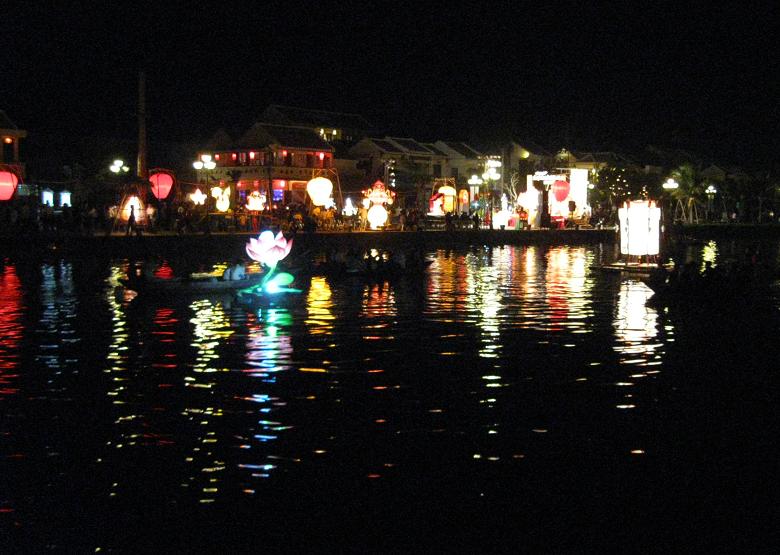
(faintly like a Vietnam version of Carmel, but much older and of course Asian). We happened to be there
during a lantern festival, which resulted in not only the streets being lit by lanterns, but also boats on the
river. From Hoi An we took a short day trip to see My Son (another World Heritage site), the
ruins of the only Hindu settlement in Vietnam, which flourished between 400 AD and 1200 AD.
On the way to the airport for our flight to Saigon, we saw some of the many military
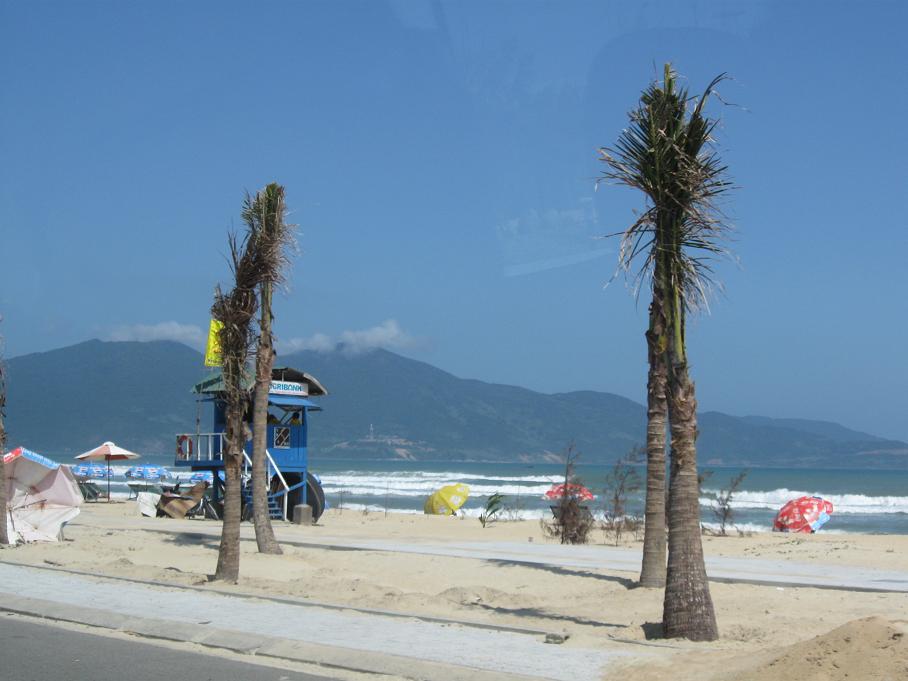
installations in and around Da Nang built by the U.S. in the late '60s, and the China Beach area, a favorite
GI R&R spot in Vietnam.
Saigon was the most lively city we visited. While Hanoi is interesting and has lots of history,
Saigon is clearly the business, financial, fun, etc. center of Vietnam. In Hanoi, bicycles
have pretty well been replaced by motorbikes, but in Saigon, its motorbikes rapidly losing out to
cars -- here there are BMW and Mercedes Benz dealers, something we didn't see at all in Hanoi. Of
course we had to visit the War Attrocities Museum and the old Presidential Palace, complete with
the Russian-built tank that broke through the front gate in 1975. We had a drink at the rooftop bar
of the Rex Hotel, where journalists were briefed each evening on the "progress" of the war. We had
lunch one day at Pho 2000, a noodle shop where President Clinton ate during a visit in 2000. The
Saigon Opera House was right across the street from our hotel.
We also took a field trip out to the Cu Chi tunnels, where Viet Cong soldiers hid out during U.S. air raids.
We'd never heard of Can Tho, but this town is the provincial capital of the Mekong Delta region,
our next stop. This is an interesting area, faintly similar to the river delta area around New
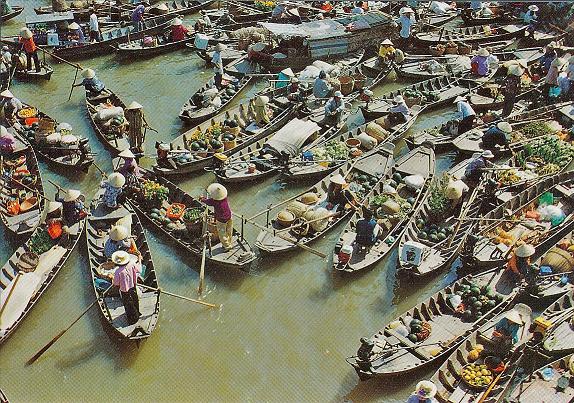
Orleans. We took lots of boat trips in the area, and were impressed at what takes place on the water
(including amazing floating markets) in this enormous farming region. We had a final (and delicious as
usual) dinner with our guide before we left Vietnam.
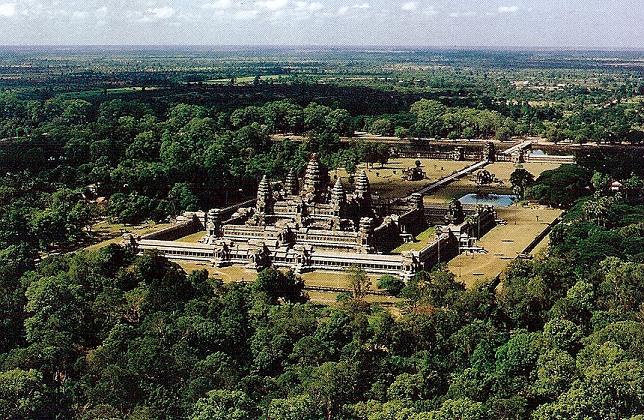
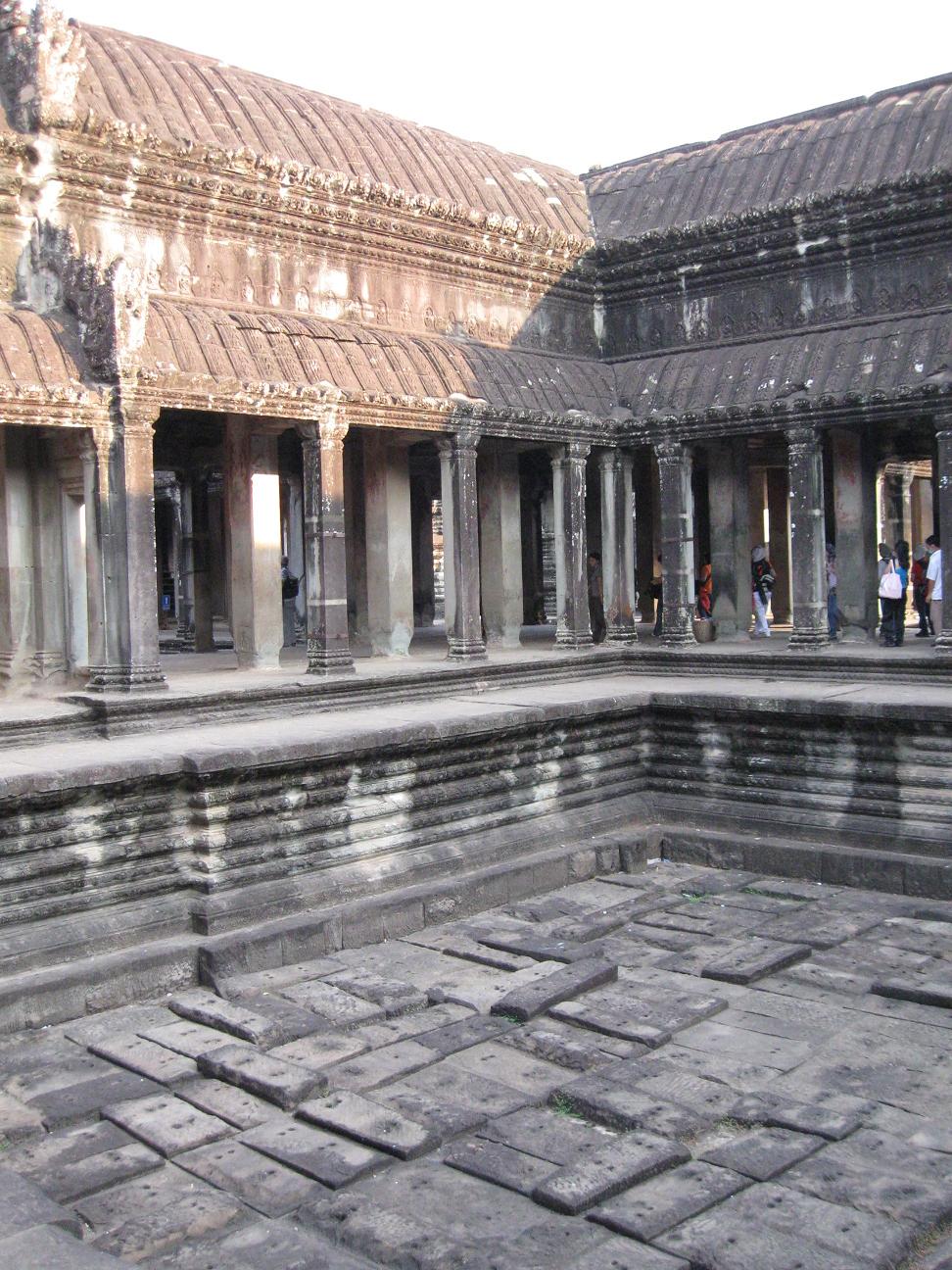
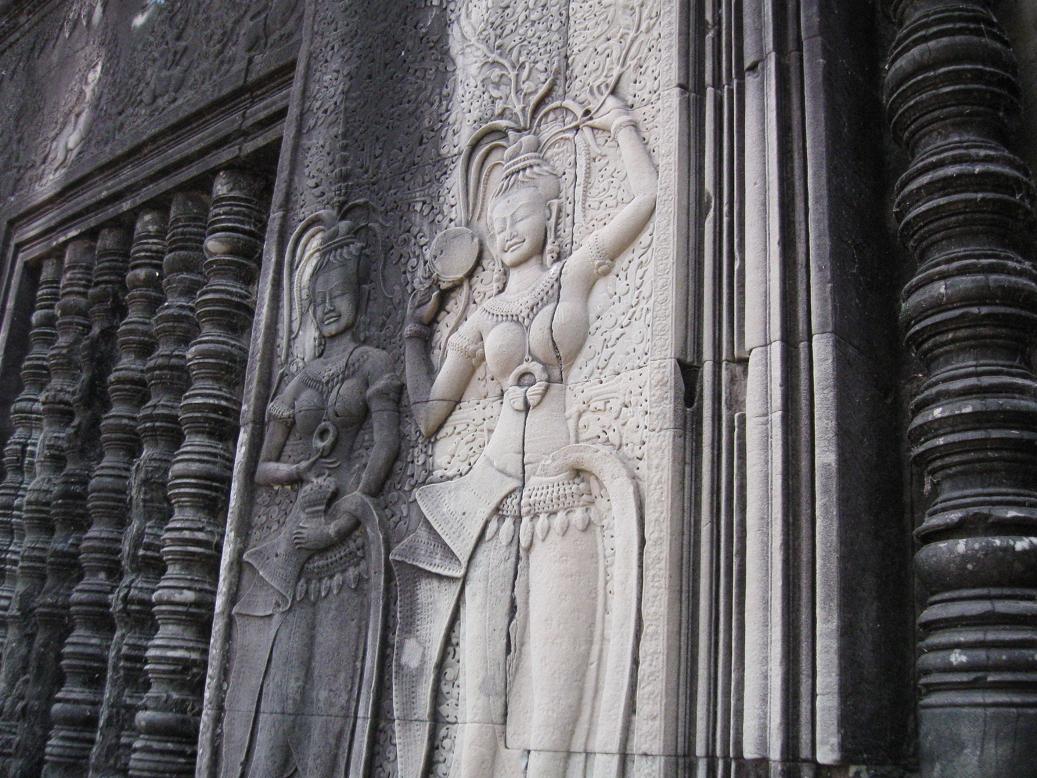
Our 3 day visit to Cambodia was all about Angkor Wat. This is a huge temple and palace, very well preserved,
built about 900 years ago, and is Cambodia's top tourist attraction. It's another "one-of-a-kind-in-the-world"
place. We saw signs of more recent activity, including bullet holes from fighting nearby in the 70's, and an
archeologist, painstakingly cataloging more details around damaged parts of the structure.
Of course after hours climbing around exploring, it was nice to go back to our hotel, the Raffles "Grand d'Angkor."
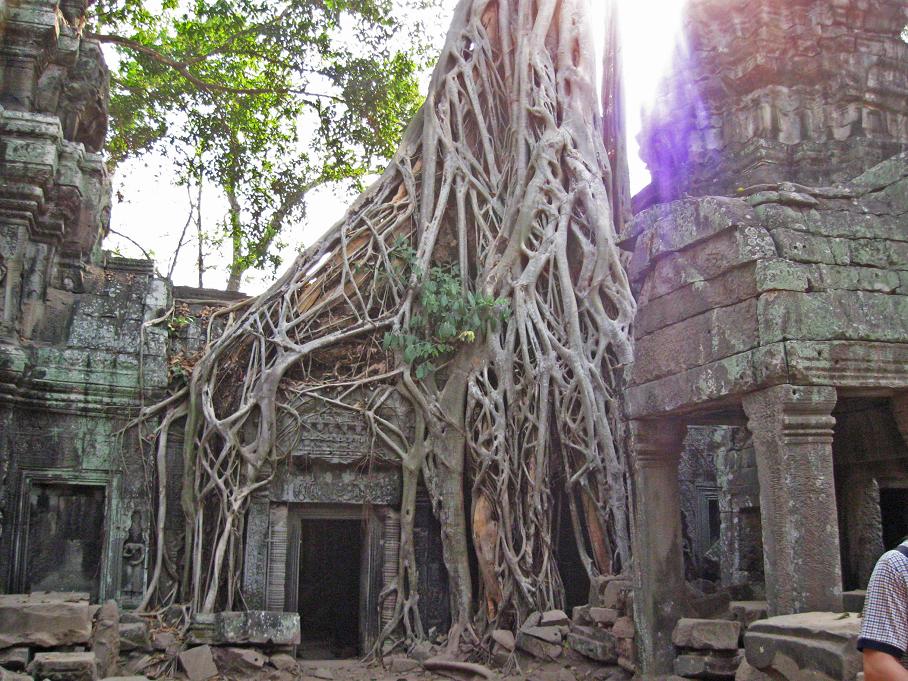
Angkor Wat is the biggest ancient site around the town of Siem Reap, but there are hundreds of others. One
we particularly enjoyed demonstrates the power of tree roots, which have greatly damaged the old stone
structure -- it was the site of filming for the 2001 movie "Lara Croft: Tomb Raider." (Too bad the star
wasn't hanging around when we visited; I could have gotten her autograph!)
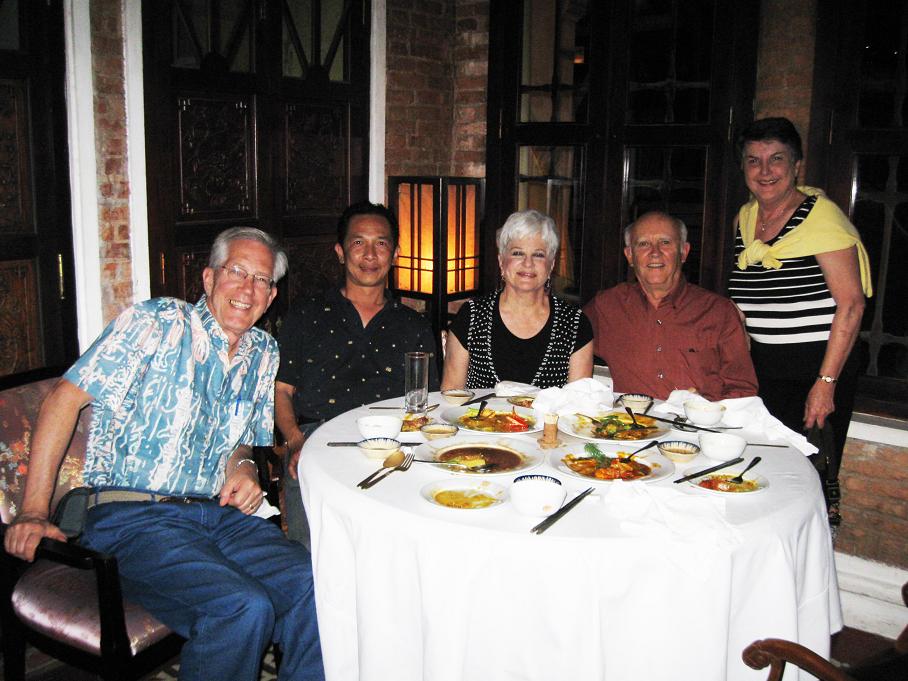
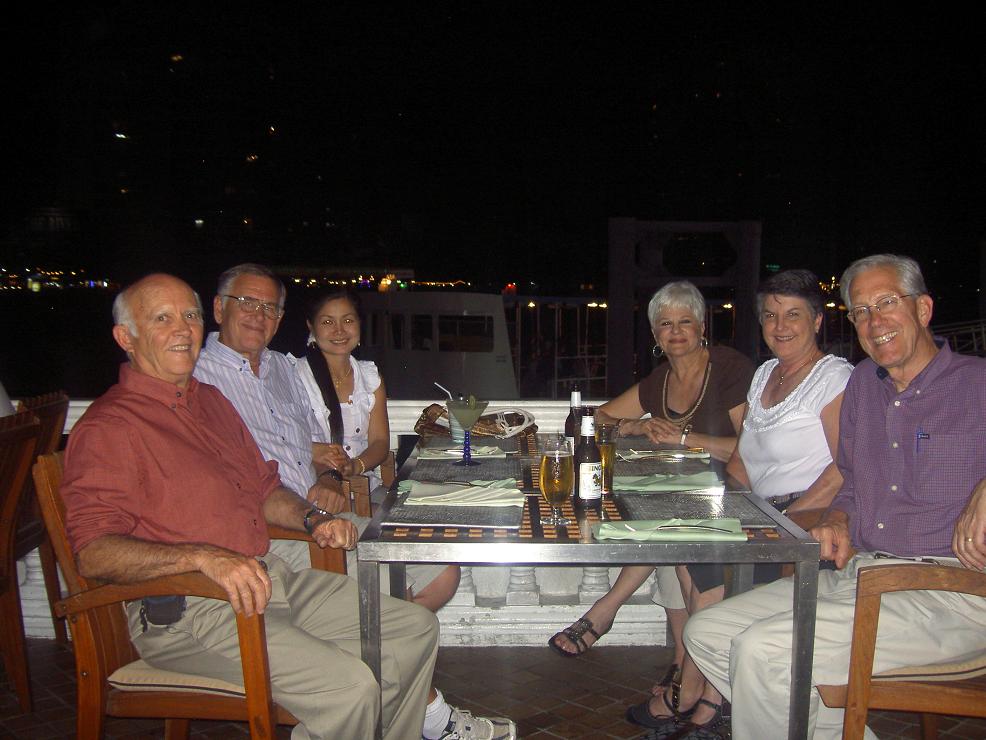
Last, we flew to Bangkok, both for a bit of rest before starting the long trip home, and to visit some friends
of Gary and Joan, who retired from California and now lives in Thailand. Here we are sitting on the banks of
the river at the hotel's restaurant, and looking out our room window at the river.